I hate to start off my first post being too “lawyer-esque” but I do want to throw out a bit of a caveat: this post is by no means an all you need to know guide to Intellectual Property and it also isn’t to be taken as legal advice. For the most part, every scenario or problem has its own little details that make it in some way different, so although I hope the below will help provide a basic overview, there’s nothing quite like talking to a lawyer in person if you have specific concerns or queries. I promise that nowadays lawyers (for the most part) are nothing like the age-old stereotype suggests!
Now that the caveat is out the way! I hope the below, and the blog in general, will give you a brief and interesting overview of the basic Intellectual Property rights that exist without most people ever realising it. Most of all I hope it shows you that the law can be interesting and that a basic understanding of it is a useful tool to have in your pocket!
IN A NUTSHELL
Intellectual Property or “IP” is the expression of creative ideas as perhaps literary works, artistic works, designs, names, symbols and so on. IP rights are the law’s way of rewarding and encouraging innovation, think of them as the protective blanket around the expression of ideas! The concept is that the owner of the IP is rewarded with the exclusive right to exploit their work which then hopefully encourages innovation.
The common IP rights are Copyright, Trade Marks, Designs and Patents.
Fashion is without a doubt an IP rich industry and it is filled with IP rights that can be licensed, sold, bought or assigned. IP rights work to protect the creators, or to be specific the legal owners, of the work so that they alone can use, assign or licence their work. In turn it then follows that they can “sue” for unauthorised use of these rights.
THE RIGHTS
Copyright: Copyright is its own beast, in other words, it is a huge developing area and possibly the most well known of all the rights. It is not a right that has to be registered, unlike trade marks, and occurs automatically so long as certain criteria are satisfied. Copyright protects original artistic, literary, dramatic and musical works-the words I am writing are protected by copyright. Fashion will generally fall under the “artistic” umbrella but a book about fashion will be under the “literary” umbrella, and so on.
Trade Marks: A trade mark acts as a badge of origin for goods and services, its primary purpose has traditionally been to identify the source of the goods or services. Trade Marks are everywhere, think Louis Vuitton, Chloe, Givenchy, Chanel, Gucci, Prada to name a few- they are all Trade Marks. A Trade Mark has to satisfy certain criteria to be registered but it can be a name, a symbol or a phrase- essentially something that can be represented visually. Personally I am most interested in Trade Marks as the power of branding should never be underestimated.
Designs: To make things nice and easy (!), there are four types of design rights: Registered and unregistered UK design rights and registered and unregistered community (EU) design rights. Obviously this is the case at the time of writing when the UK is still part of the EU!
Design rights play a vital role in the fashion industry and are focused on protecting the appearance of a product, such as the look and structure, and can protect the whole or part of a product. Although it is worth noting that the UK and EU design rights differ in the definition of what is protected.
Patents: These are a specialism all on their own! Patents give an inventor the exclusive right to make, sell, use etc an invention for a limited period of time, usually 20 years. It is essentially an exchange with the Government whereby protection is granted for full disclosure of the invention itself. This is with a view to again encouraging innovation whilst also encouraging continuous development for the benefit of the public and economy at large. It means the creator can have the exclusive licence to benefit from the invention for 20 years, after which time it is fair game for all.
Patents cover products or processes that contain a new function, it does not necessarily have to be complex, but it does have to be new and innovative. They are, generally speaking, difficult and expensive to obtain. I won’t cover too much about patents within this blog but if you want more information an interesting place to start is to look at the articles and case law involving Dyson.
THROWING IN SOME FIGURES
I recently read that the British luxury industry is worth a heart stopping £32 billion to the UK economy as of 2015, so we’re not talking small numbers here.
The Centre for Fashion Enterprise previously reported (in 2010) that IP infringement can cost designers anywhere from £100,000 to £500,000 in lost revenues a year! And I’m sure since this report this figure has increased. It’s therefore worth any designer or design house, big or small, spending time and money to understand what IP is and how it can be protected and exploited. And that is exactly what a lot of the big named brands do, as you will see!
When peering into what IP rights may exist in the fashion sector it’s worth looking at some of the biggest and most luxurious brands that have managed to create such an image, buzz and reputation around their name, products and designs. This isn’t just because this is where it becomes most interesting but because this is brand protection at the height of its game. This is exactly what I’ll be doing throughout this blog and what better example to turn to for my next post than the illustrious Hermes!
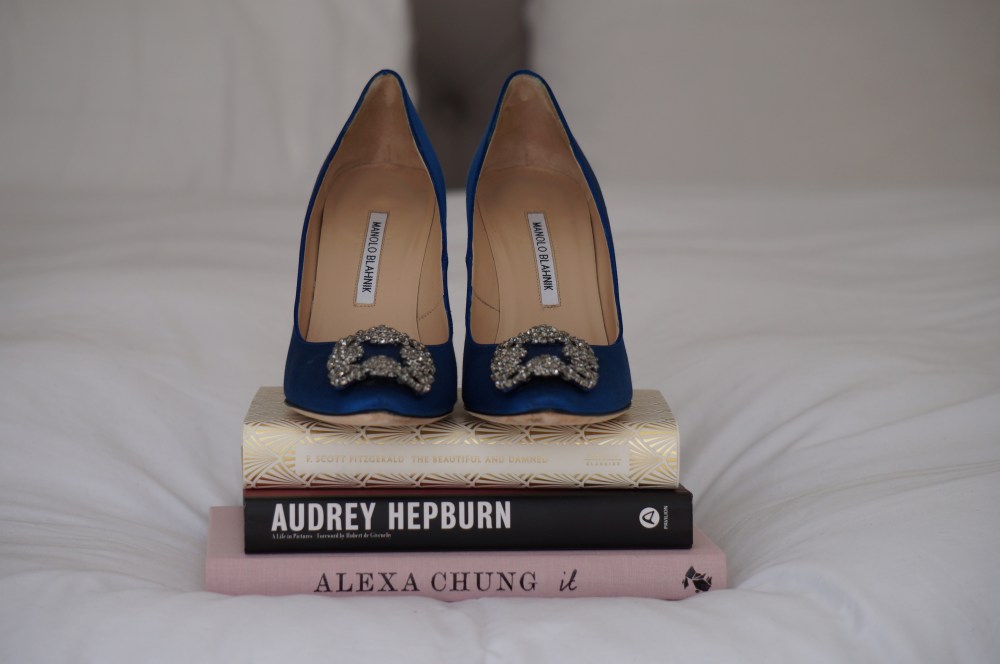
Image credit: Me and Dottie Photography
 LAW MEETS FASHION